A Time to Forget
A Time to Forget is a lyrical meditation on love, memory, and the enduring bonds that shape our lives. Rich in Indian imagery and emotional depth, the collection reflects Rajiv Khandelwal's mature poetic vision.
About the Book
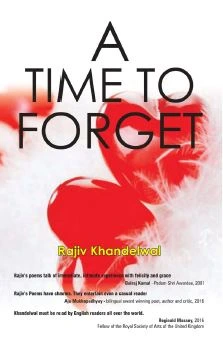
A Time to Forget is Rajiv Khandelwal’s fourth collection of poems, published in 2017 by The Poetry Society of India. The book carries a Foreword by Reginald Massey and a Preface by Bhupinder Parihar, both longtime readers of Khandelwal’s work, and it is dedicated to Dr Som Ranchan, the mentor whose encouragement had set Khandelwal writing in 1996. Ranchan died in 2014, having read almost all of the poems gathered here in draft. The dedication states plainly what the title only implies, that it is impossible to forget him.
Parihar’s Preface calls the title itself ironic, since to remember, the poems suggest, is in some sense already to let go. The collection carries forward the love poetry of Khandelwal’s earlier books in a register Massey’s Foreword describes as intensely contemporary, set against a world where one-night stands proliferate while the poems themselves hold to older, steadier values. Indian imagery runs through the book throughout, in references to Radha, Meera, and Krishna, in mehendi and sindoor, peepal trees and the small physical world of an Indian morning.
Sixty-seven poems make up this fourth collection, written across two decades of correspondence with the mentor to whom the book belongs.
PRAISE AND CRITICAL ACCLAIM
“Rajiv Khandelwal’s poetry encapsulates the very essence of poetry: reflective, imaginative, emotionally resonant, and crafted with a keen sense of language. His work is a testament to the power of poetry to evoke profound emotions and offer unexpected insights to the reader.”
Arif Karkhi Abukhudairi | Professor of Arabic Literature, University of Cairo, Egypt“One clearly sees a fusion of thought and feeling in Khandelwal’s poetry which has seamlessly integrated the seemingly opposing worlds of poetry and intellect through his powerful imagination, making him a unique poet-magnate.”
Dr Dalip Khetarpal | Reviewer, critic, poet, short story writer, columnist“The range of Khandelwal’s poetry is vast and he writes almost on all the dimensions of life quite comfortably. His diction is rich and philosophy profound.”
Dr Harish Thakur | Professor; Editor, Conifer CallsA Time to Forget is an aesthetic anthology that reblooms and regenerates gloomy and withered hearts like resurrection of dead lilies beside the river. It’s an indispensable companion for all ages of lovebirds like joy to the soul.
Muideen Lanre Dauda | Nigeria, author of In the Mind of my Mind and Adularescence of Love and Peace, Co-founder of Literati.Highly suggestive, full of recitative quality and written in a simple style the poems in A Time to Forget exhibit a maturity surpassing the ordinary. The use of contemporary idiom and beautiful images awards a freshness to Rajiv Khandelwal’s expression that demands to be relished time and again. The rhythm of ideas coupled with a music of words makes Rajiv’s poetry wonderful and earns the right to be considered unique.
Dr. N.K. Neb | Editor in Chief Pragati’s English Journal, Associate Professor, P.G. Department of English D.A.V. College JalandharAmor Vincit Omnia – Love Wins All! This is ever memorable. Love is the cornerstone of life and living. The poet Rajiv Khandelwal in A Time to Forget views LOVE in a myriad ways and umpteen shades and his penning reveals deep thoughtfulness. Rajiv has carved for himself a niche in the Parthenon of imaginative, realistic and soul stirring poetic achievement.
Dr. Rama Rao Vadapalli V B | Professor, Poet, Author and CriticIn A Time to Forget, the poems do not always follow the familiar verse forms. The applicationof dissimilar words shows how Khandelwal has foregrounded a dynamic process in hispoetry. The memories and perceptions unify the style that gives an impression of naturalcreativity.
Ramandeep Kaur, Kamaldeep Kaur | Research Scholars, Department of English Punjabi University, Patiala“I have been overwhelmed by the poet’s ingenious images and similes for example, emotional tsunami, emotional union, stitching scraps of memories, perfume of a wise parliamentarian, effervescent as a chemical reaction. His images are both sensual and cerebral.”
Prof. Ram Bhagwan Singh | Academician, literary critic, and translator"Rajiv Khandelwal is emerging steadily on the Indian English literary landscape with A Time to Forget, an urban poet’s outpouring of love and its allied themes. Soaked in the universal phenomenon of love, the volume offers polychromatic images tinged with symbols and metaphors, making the reading experience like passing through 'alleys of beauty and bliss'. Rajiv articulates these themes beautifully and blissfully, while his craftsmanship also imbues modern modes of Wi-Fi culture, social imbroglio, and economic upheavals. From his earlier works to the present, Rajiv’s poetic cascade remains fresh and jovial."
Dr. Shaleen Singh | Assistant. Professor and Head, Department of English, S.S. P.G. College , Shajahanpur, U.P., Poet, editor and critic“Rajiv Khandelwal is a very worthy poet whose name will be remembered for long. In A Time to Forget, he epitomizes the typical poet of today, concise, hard-hitting, loving and human in concept and presentation.”
Dr Stephen Gill | Poet Laureate of Ansted University; Novelist, Poet and Literary Critic from Canada“Khandelwal’s vivid imagery and intriguing similes and metaphors make A Time to Forget a page-turner. The conceits in his poetry allude to the metaphysical poets.”
Dr Sulakshna Sharma | Review article published in Poetcrit XXXI, Vol. 2, July–Dec 2018Rajiv Khandewal is a very worthy poet whose name will be remembered for long. In A Time To Forget, he epitomizes the typical poet of today, concise, hard-hitting, loving and human in concept and presentation. He is emerging as a popular poet.
Dr. Yogesh Sharma | Associate Professor, Department of English, (S.S.N. College, University of Delhi) Alipur – Delhi 110036Reviewed by
- Arif Karkhi Abukhudairi — ‘The Power of Poetry’.
- Dr Dalip Khetarpal — ‘Critique of Rajiv Khandelwal’s ‘A Time to Forget’’ — Click here to read this review.
- Kailash Ahluwalia — ‘A Time to Forget: A Rereading of the Text’
- Mohammad Azarm — ‘Cross-Cultural and Philosophical Reading of A Time to Forget’.
- Parthajit Ghosh - An Annexure of Time: A Reading of A Time to Forget
- Prof. Ram Bhagwan Singh: | Cyber Literature, Vol. XX (Issue 40), No. II, December 2017 -
-
Dr S. Esther Juliet Sujatha — The Fusion of Art and Emotion in Khandelwal's "A Time to Forget" —
Click here to read this review - Shafkat Aziz Hajam — ‘A Reading of A Time to Forget’.
- Dr Sonika Gurjar — ‘The Extraordinary in the Ordinary: Introspection and Universality in Khandelwal's Poetry’.
- Dr Srinivas Vasudev — 'When Emotion Finds Its Thought: A Review of Rajiv Khandelwal's A Time to Forget'.
A Fusion of Thought and Feeling: A Critique of A Time to Forget
A critical appreciation of A Time to Forget by Dr. Dalip Khetarpal.
When mind and emotion work together in harmony, a person becomes truly complete. This is exemplified by Rajiv Khandelwal, who skilfully applies his intellect in business while also channelling his emotions to create remarkable poetry. T. S. Eliot advocates “a fusion of thought and feeling”, “a direct sensuous apprehension of thought”. Such fusion, according to Eliot, is essential for good poetry. One clearly sees such a fusion in Khandelwal’s poetry, which has seamlessly integrated the seemingly opposing worlds of poetry and intellect through his powerful imagination, making him a unique poet-magnate.
Since 1998, Rajiv Khandelwal has published seven poetry collections: Conch Shells and Cowries (1998), Love is a Lot of Work (2013), A Monument to Pigeons (2013), A Time to Forget (2017), Dwelling with Denial (2020), Khandelwal’s Poetic Process (2024), and Crystalline Tidings (2025). These works are widely read for their simplicity, lively and pacy style, and focus on everyday experiences. Despite the depth and philosophical nature of his poetry, Khandelwal remains accessible to his readers.
The following analysis focuses on those poems from A Time to Forget that resonated most strongly with this critic.
Beauty in Ordinary Things
The poem skilfully weaves together the ordinary and the extraordinary, highlighting how beauty can be found in the most mundane aspects of life. Through its free verse structure, the poem emphasises the multifaceted nature of the subject, celebrated not only for physical allure but also for intellectual and emotional depth. The use of vivid imagery, such as the ‘five scoop ice cream cone’ and the ‘Palace of Perfection’, elevates the subject to an almost mythical status. The integration of symbols like Hypatia of Alexandria adds a layer of historical reverence, merging the subject’s contemporary beauty with the intellectual legacy of the past. The strength of the poem lies in its ability to evoke a deep emotional response through vivid, dynamic imagery.
A Ritual
A poignant poem that critiques the contradictions in cultural traditions, particularly marriage rituals. The free verse structure allows for raw emotional expression, while stark imagery like ‘blood, sweat and toil’ and ‘raped for just a pinch of mehendi and sindoor’ highlights the contrast between personal sacrifice and the superficial demands of societal rituals. The central theme is the exploitation of individual efforts for the sake of maintaining traditions. Symbols like ‘mehendi and sindoor’ represent the oppressive nature of these customs, and the ‘suddenly silent shehanai’ suggests the harsh reality beneath the celebratory facade. The tone is bitter and disillusioned, with a somber mood that invites critical examination of cultural practices.
Reflection
A contemplative poem that explores the power of language, using water imagery to illustrate how words flow and impact us. The free verse structure mirrors this fluidity, with imagery ranging from ‘drips’ to ‘torrents’, showing that language can be both gentle and overwhelming. The central theme is the manipulation of language, particularly how rhetoric, especially in political contexts, can divide and deceive. Symbols like ‘wave after wave of believable fiction’ highlight the deceptive nature of persuasive language. The tone is critical and reflective, inviting deep contemplation about the power and authenticity of language.
Standing Alone
The poem powerfully explores themes of isolation, identity, and the fight against prejudice. Vivid imagery, like ‘half naked’ and ‘blind-eyed crowds’, highlights the speaker’s emotional turmoil. The free verse structure amplifies the raw intensity of these feelings. Key themes include loneliness, imposed identities, psychological trauma, and the battle to retain compassion. Symbolism, such as ‘ethnic cleanser identity’ and ‘quicksand of crazy stereotypes’, deepens the poem’s impact. The tone is a blend of despair, anger, and defiance.
Sages Confirm
The poem reflects on the complex nature of pain, blending physical, emotional, and existential dimensions. Through free verse, it contrasts physical pain, depicted with vivid imagery like ‘scorching chimta’ and ‘stubbed toe’, with deeper emotional pain and philosophical reflections on suffering. The poem explores themes such as the immediacy of physical pain versus the enduring nature of emotional pain, and the intertwining of love and pain. Symbolism such as ‘live-in-lover in someone else’s arm’ highlights emotional betrayal, while references to sages and Aristotle add philosophical depth.
Comfort Zone
The poem poignantly explores the emotional turmoil of unrequited love, paralleling it with the resilience often seen in corrupt politicians. Written in free verse, it captures the speaker’s journey from eager anticipation to disillusionment, using vivid imagery like ‘leaping eagerness’ and ‘crawling about like ants’. Symbolism drawn from Radha and Krishna represents unattainable love, while Indian politicians represent resilience through unethical means. The tone shifts from excitement to melancholy, with expressive and candid language that adds a satirical touch.
Itch
The poem uses vivid imagery and metaphor to express deep longing and frustration. The lines Parched lips / Reconciliatory desire / Aches for oasis evoke intense thirst and yearning, both physical and emotional. The relentless suffering is compared to an unreachable itch, emphasising a specific, persistent frustration:
The continuous suffering As insistent As the desire to itch One’s shoulder blades Where own hands Bound by frozen shoulders Refuse to go
‘Frozen shoulders’ symbolises an inability to relieve one’s discomfort, representing emotional paralysis or the need for external help. The speaker refuses to seek help due to pride, with the ‘trifling domestic squabble’ indicating that minor issues can be magnified by ego.
Labyrinth of Light
The poem delves into themes of morality, the soul, and the mind’s rebellion against conventional beliefs. The lines Morality an ash / Dropping / Bit by bit / Into putrescent pits depict morality gradually decaying, symbolised by ash falling into rotting pits. The soul is portrayed as fragile and fleeting, compared to smoke or thistledown, emphasising its impermanence. The ‘rebel mind’, seeking truth and enlightenment, encourages the heart to detach from traditional beliefs, signalling a pursuit of higher understanding.
Trespass
The poem delves into a deep emotional experience, using loneliness and sadness as metaphors for unwanted companions. The poem personifies these emotions, suggesting they kept the speaker company during another person’s absence. Invasive thoughts of the absent person are compared to predatory men chasing a woman at night, highlighting how these thoughts intrude disturbingly. Terms like ‘invading’, ‘provoking’, and ‘molesting’ emphasise the aggressive, unsettling nature of these thoughts.
End of the Tunnel
The poem explores themes of light and darkness, focusing on fear, self-awareness, and internal struggle. Light exists within a tunnel of thick darkness, symbolising the struggle to maintain purity amid overwhelming obscurity. Darkness, over time, infiltrates and corrupts by finding hidden angles to stain the heart. The heart, like a mirror, reflects this internal battle, with the light fearing to awaken the ‘demonic element’ within, indicating self-awareness of one’s potential for darkness.
Returned to Life
The poem captures a transformative moment where a fleeting encounter rekindles a sense of vitality. The speaker describes a fast-paced life, ‘Speeding through Life’, suggesting a lack of deep reflection or connection. A moment of connection is emphasised through a ‘gaze’ described as sharp and penetrating. This brief encounter, likened to a ‘New York minute’, quickly revives forgotten memories and feelings. The final line, ‘The appetite returned to life’, signifies a reawakening of desire or motivation that had been dormant.
Empathy
The poem delves into the speaker’s deep emotional connection when reading about others’ suffering. The speaker strongly feels the pain of rape victims, highlighting strong empathy for others’ trauma. This empathy then triggers the speaker’s own pain, reactivating past experiences stored in ‘controlled images’. The line between fantasy and reality fades as the speaker’s empathetic pain becomes part of their identity. The phrase ‘What works / Works’ reflects a pragmatic acceptance of empathy’s healing power, with a nod to Carl Jung’s psychological insights.
Free Will
The poem explores the intense and almost addictive emotional response the speaker experiences in the presence of a particular person. The imagery of fireworks and a racing heart conveys a sudden, overwhelming rush of euphoria, likened to a drug-induced high. The stark contrast between the speaker’s emotional state with and without the person highlights a deep dependency, suggesting that the speaker’s sense of well-being is closely tied to this relationship. The poem hints at the potential loss of self-control or autonomy.
You
The poem portrays the powerful impact of another person’s thoughts on the speaker, comparing them to high-stress situations like an unopened tax notice or the controversy of a jailed god-man. These comparisons evoke a sense of anxiety, tension, and unavoidable confrontation. The vivid imagery of memories ‘blazing’ through the mind indicates that these thoughts stir deep, intense recollections, perhaps of unresolved issues or powerful emotions.
When You Are Not With Me
The poem describes the speaker’s emotional turmoil in the absence of the person they care about. Irritability and depression take hold, becoming inescapable realities. Their emotions spiral into chaos, leaving the speaker’s heart battered and vulnerable to dark, self-destructive thoughts. Despite this inner turmoil, the speaker holds onto a glimmer of hope, yearning to know if the other person is safe and well.
Design
The poem reflects on how words, when thoughtfully crafted, can evoke powerful and vivid memories. These memories are compared to flowers blooming into intricate, expressive arrangements, where the beauty of flowers like Zinnia Magenta, Lily of the Valley, and Rose symbolises the emotional richness of these recollections. However, the presence of thorns serves as a metaphor for the inevitable challenges and pains that accompany even the most beautiful memories. The poem effectively illustrates the dual nature of memory: both beautiful and painful.
A Transition Not So Smooth
The poem uses the metaphor of waiting to explore the tension and unease that accompany the shift from anticipation to realisation. The speaker describes prolonged waiting as consuming, comparing it to the delay in arresting a controversial figure, which highlights the frustration and impatience inherent in the process. The arrival of a dream is likened to a taxi with its meter running, eager to decipher the meaning in a brief and cryptic message, symbolising the urgency and anxiety that accompany this transition.
Unto the Self
The poem portrays the speaker’s struggle to find inner peace and self-reconnection. The tranquil setting of the lily pond contrasts with the restless, compulsive nature of the speaker’s thoughts, which are likened to the addictive pull of cocaine. The intrusion of thoughts about someone else, vivid and alluring like peacock feathers, complicates this internal journey. The poem highlights the tension between the desire for inner tranquillity and the persistent distractions of the mind.
Shared Growth
The poem explores the deepening connection between the speaker and another person through their daily conversations. The speaker finds profound fulfilment in shared communication and connection, contrasting it with the transient nature of physical pleasure. The speaker likens the anticipation of these conversations to an addiction, but one that is more nourishing and sustaining. The poem suggests that true connection lies not in physical acts but in the consistent, meaningful exchange of ideas and emotions.
Endless Nights
Moored pain navigates through the nights, moving with a rhythmic, throbbing motion. The poet journeys from one shore to another, towing along the debris of his pain, with nights of self-drowning serving as his only form of solace. In this relentless voyage, he searches for fleeting moments of hope or inspiration, symbolised by shooting stars.
Ready to Be Hurt Again
The poem explores the theme of emotional vulnerability and the inevitability of pain in relationships. It reflects on the disintegration of friendships and the erosion of once-solid rationalisations. The language suggests a sense of inevitability and resignation, as the speaker acknowledges the transient nature of human connections. The use of phrases like ‘poisoned chalice’ and ‘dissonance to build into a full orchestra of emotion’ evokes the idea of willingly embracing emotional pain despite knowing the potential for harm.
Will You or Won’t You
The poem delves into the intense emotional response triggered by the possibility of rekindled connection, symbolised by the appearance of a familiar name on a mobile screen. The poem captures the complexity of emotions that arise in a split second: excitement, longing, anxiety, and the weight of past experiences converge in a single moment. The metaphor of the mind as a ‘bustling street’ vividly illustrates the chaotic and overwhelming nature of these thoughts.
Ambrosia
The poem vividly explores sensuality and desire through a blend of physical and emotional imagery. The poet uses alliteration and playful language to create a rhythmic and cinematic depiction. The closing lines introduce a sense of ephemeral beauty, with ‘wisps of ambrosia’ symbolising fleeting, divine pleasure. The poem richly intertwines physical descriptions with emotional responses, creating a dynamic and immersive narrative.
Snapshot Moment
The poem critiques the power of appearance and media sensationalism, juxtaposing a woman’s captivating presence with the intense media coverage of the Mumbai massacre, highlighting how both can hold an audience’s attention. The poem suggests that both the woman’s allure and the media’s portrayal have a ‘killer image’ that leaves a lasting impression, illustrating the potent influence of visual appeal in shaping responses and reactions.
Refusal to Stay Put
The poem delves into the emotional distress and persistent memories resulting from a breakdown in communication within a relationship. Contrasting images, such as the slow movement of glaciers and the rapid chaos of daylight robbers, reflect the fluctuating pace of the narrator’s thoughts. The poem conveys a sense of helplessness as happiness fades, and the unshakeable, vivid memories haunt the narrator, capturing the agony of unresolved communication.
The Good Old Days
The poem reflects nostalgically on a past time of simplicity and fulfilment, marked by regular companionship and meaningful conversations. The repeated phrase ‘In the good old days’ emphasises the speaker’s longing for this period, highlighting routine visits that symbolise intimacy. The closing imagery of the good old days ‘taking a silent stroll into the sunset’ signifies a peaceful yet irreversible end. The poem is a bittersweet contemplation of past happiness and the enduring impact of those cherished moments.
Presence
A contemplative poem about the lasting impact of a shared silent moment between two individuals at a lily pond. The speaker is captivated by the other person’s beauty while the latter is lost in thought, highlighting their disconnect. The intense memory of this moment is conveyed through the metaphor of the person’s scent being as consuming as wildfires. Despite the passage of time, the memory persists, described as intrusive and demanding attention. The poem explores themes of memory, missed connections, and the lasting resonance of past moments.
Thresholds
A reflective poem that intertwines physical pain with emotional memories, showing how small moments can hold profound significance. It begins with the speaker accidentally slamming their finger in a car door, leading to pain and tears. This pain triggers a memory of intimate care from another person, transforming the painful experience into a cherished memory. In contrast, the present is marked by resignation and disconnection. The poem concludes by noting that these small memories, though seemingly insignificant, act as emotional thresholds, shaping the speaker’s experiences and expectations.
Anything Can Happen
The poem blends whimsical and poignant imagery to illustrate life’s unpredictability and the mixture of joy and sorrow. It begins with a playful reference to the ‘Vienna Vegetable Orchestra’, symbolising creativity and unexpected delights. The speaker, inspired by letters and postcards, imagines themselves as a bard writing romantic and heartfelt lyrics to cope with emotions and acknowledge the duality of love and loss. The poem explores life’s unpredictability, the interplay of joy and sorrow, and the role of memories and creativity in navigating these experiences.
To enhance the meaning and themes of his poems and to make them more aesthetically pleasing, impactful, dynamic, and memorable, Khandelwal has employed a wide range of literary devices throughout the anthology. He skilfully uses irony, banter, humour, satire, metaphor, simile, imagery, allusion, personification, symbolism, anthropomorphism, and euphemism, among others. Critics and reviewers have praised Khandelwal for his mastery of art and craft and the wide-ranging themes he covers. Reginald Massey has rightly observed: “The poems have an immediacy and urgency. Their sharp laser-like intensity penetrates the head and the heart. Khandelwal is a new voice singing songs of love for the new generation of the new world.” This judgement suitably complements the remarks of Dr Som Ranchan: “An original voice with the distinct idiom, terse, scintillating, at times elliptical, mirroring upper crusts’ shenanigans, corruption, material, moral, psychic with satire and punch, and surreal inner states with viscosity and brevity.”
Keeping in view the above facts, there is every reason why Rajiv Khandelwal should receive international acclaim.
The Fusion of Art and Emotion in Khandelwal's A Time to Forget
An insightful review of A Time to Forget by Dr. S. Esther Juliet Sujatha.
Rajiv Khandelwal’s A Time to Forget is a compelling collection of 67 poems that transports the reader into a realm where love, pain, separation, social criticism, and philosophical musings intertwine. The title itself is apt, as the poems allow the reader to momentarily forget mundane realities and immerse themselves in a world of heightened emotions and profound reflections.
One of the standout pieces, ‘Beauty in Ordinary Things’, explores the aesthetics hidden in everyday experiences. The poet delineates the beauty of his beloved using both modern and classical imagery, including a striking reference to Hypatia of Alexandria, thereby blending intellectual depth with emotional resonance. Love, as described in the collection, is intricately linked with pain, both emotional and existential. The poet observes how God and love both multiply pain, suggesting that “Pain is the passion of the soul.” In Khandelwal’s world, love and pain are not opposites but mirror reflections of the same emotional truth.
In ‘Tonic’, the poet enjoys nature during a walk yet yearns for a conversation with his absent beloved. Despite the sorrow of separation, he maintains an optimistic tone, stating that “Separation pain settles like dead leaves.” This ability to find beauty even in anguish is a recurring theme, as further seen in ‘Standing Alone’ where he writes:
Alone and lonely with my pain, Surrounded by blind-eyed crowds
The poem ‘Sages Confirm’ reiterates this philosophy, exploring both physical and emotional pain while equating them with love. The poet embraces pain with acceptance, seeing it as a necessary consequence of soulful passion.
The collection is also rich in oxymorons, a stylistic choice that reflects emotional complexity. In ‘Tonic’, he describes the breeze as “Clean, crisp, cool, citrus,” an image that simultaneously evokes freshness and sting, a metaphor for the bittersweet nature of love.
In ‘Comfort Zone’, the poet awaits his beloved with intense excitement, only to be met with disappointment conveyed ironically through the breeze. His sarcasm deepens when he likens his beloved’s ambition to that of Indian politicians, implying that both strive to overcome obstacles to claim their ‘chair’. Such metaphors blend romantic longing with political critique, showing the poet’s ability to merge personal emotion with broader societal observation.
The poet also expresses a deep admiration for Radha’s love for Krishna, hinting at the divine nature of longing. Her beauty is described as “Spontaneously unfolded like a complex bundle of puzzle,” and his desires are so intense they are relegated to dreams, a realm where his emotions remain unfulfilled.
Khandelwal’s poetic technique includes rhetorical questions deliberately devoid of question marks, such as “Who can know” and “Does a photo frame lie unattached”, underscoring the emotional detachment of the beloved and the static, unresponsive nature of memories and mementoes.
In Itch, oxymorons like “Let them with muted voices cry for caresses” illustrate suppressed desire and silent suffering. The parched lips longing for an oasis, frozen shoulders, and suffocating silence all express the mental and physical toll of separation.
The poem When You Are Not With Me contains the brilliant oxymoron “Depression dawns like the clear light of ultimate reality,” highlighting the sharp contrast between emotional darkness and mental clarity.
Modern symbols also make an appearance, such as in Washing on Sunday, where the act of doing laundry becomes a moment of philosophical introspection and poetic birth. The beloved’s eyes are described in chemical metaphors: “She effervescent as a chemical reaction,” reflecting an influence of metaphysical poets like Donne and Marvell.
Beyond love, Khandelwal addresses social issues like gender inequality and caste discrimination. In Reflection, he attacks the hollowness of Indian legal promises: “Only on paper,” and satirises the obsession with political statues: “Standing, doing nothing, achieving nothing.” He compares Indian politicians’ ambition to his own emotional ambition, both seeking a kind of ‘chair’ or resting place for their longing.
In rich, sensory imagery, he compares his beloved to the sun, hot during the day, tender in the evening, reaching for the moon. The simile “Crescent-shaped red bindi on forehead” grounds his imagery in Indian culture.
Throughout the collection, his rhyming and alliterative patterns stand out, such as “Luscious lips, lush breasts, mesmerising oval eyes” and “Trickle and torrents” from Reflection. His use of oxymoron and paradox, “Where darkness and light coexist in the debris of living,” adds philosophical depth.
In Unto the Self, the poet takes refuge in solitude by a lily pond, allowing thoughts of his beloved to lift him into a transient, poetic realm. In A Homeless Evening, he writes: “Your thoughts wear me like shoes,” an original metaphor that shows how deeply his lover’s memory is embedded in his being.
Other standout lines include:
“Those exhausted moments ended like the driving of a drunk driver” “Your anticipated call teaches the Art of Living” “Sleep waits in line”
Khandelwal’s poetic journey encompasses longing, love, memory, separation, social commentary, and existential thought, expressed in a language that is both intimate and universally relatable. His fusion of personal emotion with modern metaphors, cultural references, and philosophical musings makes this collection not just poetry, but a rich literary experience.
conclusion
A Time to Forget is more than a collection of love poems. It is a reflection on the emotional architecture of the human soul. Rajiv Khandelwal’s mastery over language, his use of oxymoron, vivid imagery, and philosophical insights make this book a must-read for lovers of contemporary Indian English poetry. His exploration of pain as a function of love resonates with every reader who has experienced longing, loss, or hope.